ACTIVE
AUTONOMOUSVEHICLES
The car that drives itself — and the trillion-dollar question of who owns the road
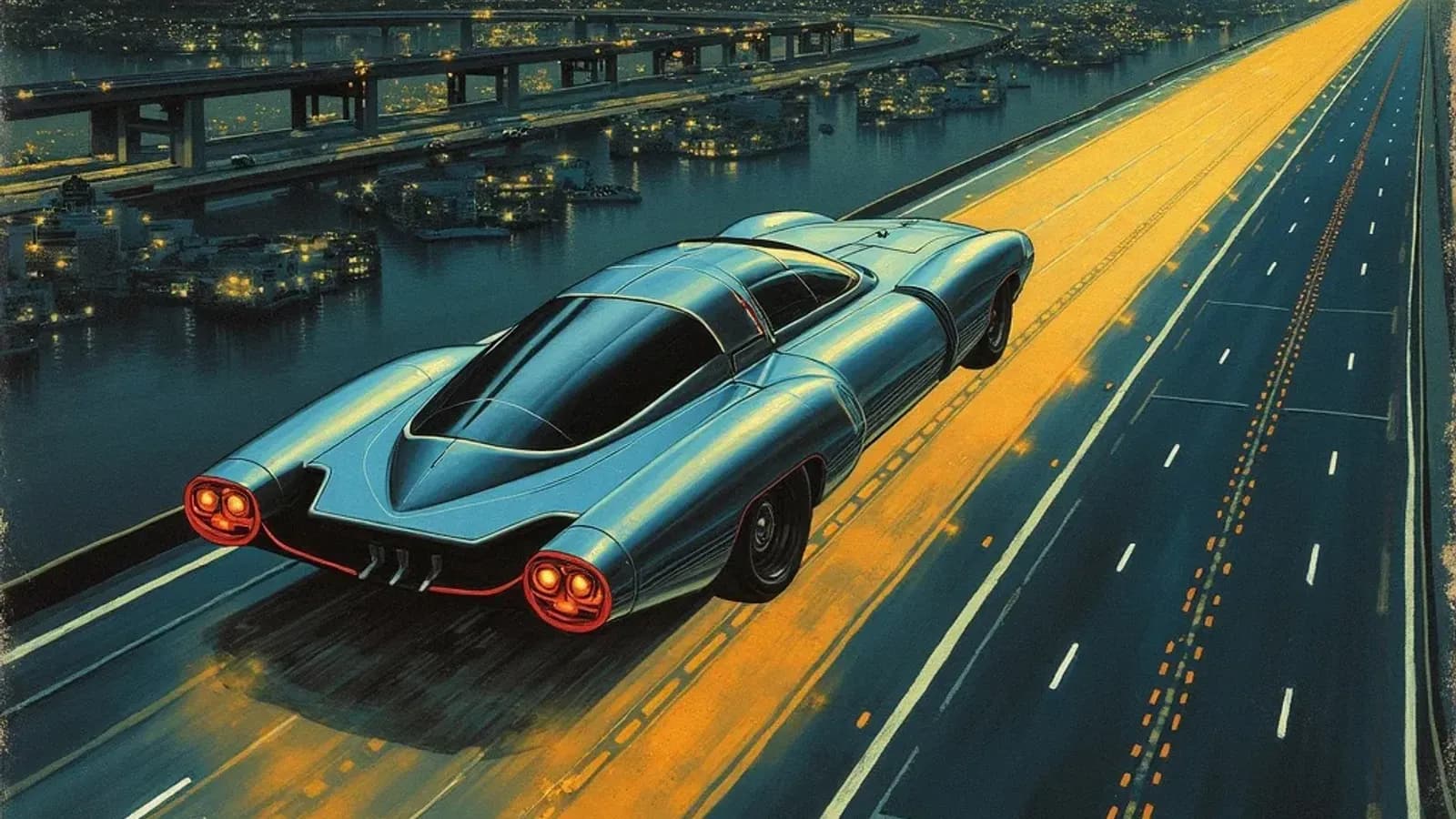
The autonomous vehicle is not a single technology. It is a stack — sensors, compute, mapping, prediction, planning, and actuation — all required to function simultaneously and flawlessly at highway speed, in rain, in construction zones, behind unpredictable human drivers.
Progress has been uneven across that stack. Sensor technology matured rapidly. Perception models achieved superhuman performance on benchmark datasets. But the edge cases — the scenarios that appear once per million miles — proved harder than the core problem. Self-driving development has consumed more capital and more time than the most aggressive early projections imagined.
What has arrived, however, is commercially real. Robotaxi networks operate without safety drivers in Phoenix, San Francisco, and Austin. Long-haul autonomous trucking has logged millions of miles commercially. The technology works at the center of its distribution. The question is how fast it expands to the tails.
The business model transformation is as significant as the technology itself. If vehicles drive autonomously, they can be owned by fleets rather than individuals. Transportation becomes a service. Parking infrastructure becomes obsolete. Insurance reprices entirely based on fleet data. Urban planning rewrites itself around throughput rather than storage.
// TIMELINE
- Ernst Dickmanns' VaMoRs van drives 100km autonomously on empty Autobahn — first demonstration
- DARPA Grand Challenge — no vehicle completes the course, but the field is catalyzed
- Stanford's Stanley wins DARPA Grand Challenge — first autonomous vehicle to complete desert course
- Google Self-Driving Car Project (later Waymo) receives first autonomous vehicle permit in Nevada
- Tesla Autopilot deployed to fleet — mass-market semi-autonomous driving begins
- Waymo One launches without safety drivers in Phoenix — first fully commercial robotaxi
- Waymo and Cruise expand to multiple major US cities; autonomous trucking companies log commercial miles
- Autonomous trucking companies achieve profitable unit economics on select interstate corridors
// RELATED ENTRIES

EMERGING
AI COMPANIONSHIP & FUTURE RELATIONSHIPS
Synthetic emotional connection at scale — and the questions it forces about loneliness, intimacy, and what relationship means
ACTIVE
SMART FACTORIES & INDUSTRY 4.0
The self-optimizing factory — where machines monitor, predict, and adapt without human intervention
ACTIVE
ELECTRIC VEHICLES
The internal combustion engine's century-long dominance ends — and the grid absorbs the transition